Linkedin & Twitter

Tuesday, May 3, 2016

Organizational Culture: the Secret of U2's Success
by Michael Lee Stallard


U2 began as a rock band that people booed and laughed at. Now, after receiving its 22nd Grammy Award in 2005, U2 has more than any band in history. It recently surpassed the Rolling  Stones’s record for the highest revenue grossing concert tour ever. Critics rave over the band’s music, and fans worldwide can’t seem to get enough of its songs and concert appearances. All the signs indicate that U2 is at the top of its game and will be going strong for the foreseeable future. So how did this group rise to such lofty heights, and what can we learn from its success?

The way U2 functions is even more extraordinary than its music. The band’s four members — lyricist and lead singer Bono, lead guitar player “the Edge,” bass guitar player Adam Clayton, and drummer Larry Mullen Jr. –have known one another since they were teenagers in Dublin, Ireland. Bono has described the band as more of an organism than an organization, and several of its attributes contribute to this unique culture. Members value continuous improvement to achieve their own potential, always maintaining the view that they can become even better.

U2’s members share a vision of their mission and values. You might expect a band’s mission to be achieving commercial success as measured by number 1 hits and concert attendance. However, U2’s mission is to improve the world through its music and influence. Bono has described himself as a traveling salesman of ideas within songs, which address themes the band members believe are important to promote, including human rights, social justice, and matters of faith. Bono and his wife, Ali, help the poor, particularly in Africa, through their philanthropy and the organizations they’ve created.

U2’s members value one another as people and don’t just think of one another as means to an end. Bono has said that although he hears melodies in his head, he is unable to translate them into written music. Considering himself a terrible guitar and keyboard player, he relies on his fellow members to help him write the songs and praises them for their talents, which are integral to U2’s success.

Bono has also had his band members’ backs during times of trial. When Larry lost his mom in a car accident a short time after the band was formed, Bono was there to support him. Bono, who had already lost his mother, understood Larry’s pain. When U2 was offered its first recording contract on the condition that it replace Larry with a more conventional drummer, Bono told the record company executive: There’s no deal without Larry. When the Edge went through divorce, his bandmates were there to support him. When Adam showed up to a concert so stoned he couldn’t perform, the others could have thrown him overboard for letting them down. Instead, they had someone step in to cover for him, and then went on to help Adam overcome his drug and alcohol addiction.

Bono’s bandmates have his back too. One of the most vivid examples of this came when U2 campaigned during the 1980s for the observance of a Martin Luther King Jr. Day in the United States. Bono received a death threat that warned him not to sing “Pride (In the Name of Love),” a song about the Rev. Martin Luther King Jr., at an upcoming concert. The FBI considered it a credible threat. Bono described in an interview that as he sang the song, he closed his eyes. When he opened his eyes again at the end of a verse, he discovered that Adam was standing in front of him to shield him from potential harm. Years later, when U2 was inducted into the Rock and Roll Hall of Fame, Bono thanked Adam for being willing to take a bullet for him.

Unlike many bands in which one megastar gets most of the economic profits, U2 shares its profits equally among the four band members and their long-time manager. This further shows the value Bono has for his band members and manager. (We’re not saying that all organizations should split the company’s economic profits equally; simply recognize that when leaders take too much it works against engaging the people they lead.)

Each member has a voice in decisions, thanks to the band’s participatory, consensus-oriented decision-making approach. If one person strongly opposes a particular action, the band won’t do it, which encourages the flow of knowledge among band members, allowing the best ideas to come to light. Their passion for excellence is also reflected in relentless arguments over their music. Bono has stated that this approach can be slow and frustrating at times, but the members of U2 believe it is necessary to achieve excellence.

These factors — which this book calls shared identity, empathy, and understanding — create a culture of connection, community, and unity among the members of U2. Bono has described the band as a tight-knit family and community. Their commitment to support one another extends beyond the four members of the band to a larger community that includes their families, crew members, and collaborators — many of whom have known each other for decades.

The secret of U2’s success is its leadership and culture. Bono connects as a leader among equals because he communicates an inspiring vision and lives it, he values people as individuals, and he gives them a voice in decision making. It is this culture of vision, value, and voice that has helped U2 achieve and sustain its superior performance.

This is a connection culture. In examining how U2 operates we see the influence a connection culture can have on the individual, as well as the group as a whole.

How about you?

An organization’s culture reflects the predominant ways of thinking, behaving, and working. To appreciate the importance of culture in the workplace, consider your own experiences. During the course of your career, have you experienced times when you were eager to get to work in the morning, you were so immersed in your work that the hours flew by, and by the end of the day you didn’t want to stop working? What was it about the job that made you feel that way?

How about the opposite? Have you experienced times when you struggled to get to work in the morning, the hours passed ever so slowly, and by the end of the day you were exhausted? Again, what was it about the job that made you feel that way?

If you are like most people, you’ve experienced those extremes during your career. I have too. As I reflected on my experiences, I realized I hadn’t changed — the culture I was in was either energizing or draining the life out of me. Thus I began a quest to identify the elements of workplace cultures that help people and organizations thrive for sustained periods of time. When the practices my team and I developed to boost employee engagement contributed to doubling our business’s revenues during the course of two and a half years, I knew I was on to something. A few years later I left Wall Street to devote my full attention to understanding employee engagement and culture so I could help others improve the cultures they were in.

Three psychosocial cultures: Connection, control, indifference

What type of culture are you in right now? As we explore what it takes to establish and strengthen connection cultures, it is instructive to understand how they differ from cultures of control and cultures of indifference.

In cultures of control, people with power, influence, and status rule over others. This culture creates an environment where people fear to make mistakes and take risks. It is stifling — killing innovation because people are afraid to speak up. Employees may feel left out, micromanaged, unsafe, hyper-criticized, or helpless.

Cultures of indifference are predominant today. In this type of culture, people are so busy chasing money, power, and status that they fail to invest the time necessary to develop healthy, supportive relationships. As a result, leaders don’t see value in the relational nature of work, and many people struggle with loneliness. Employees may feel like a cog in a machine, unimportant, uncertain, or invisible.

Both of these cultures sabotage individual and organizational performance. Feeling consistently unsupported, left out, or lonely takes a toll. Without the psychological resources to cope with the normal stress of modern organizational life, employees may turn to unhealthy attitudes and behaviors, many of which are addictive and destructive.

A distinguishing feature of these cultures is a sole focus on task excellence. Leaders may openly dismiss the need for relationship excellence. Others may give it lip service and occasional attention, or see its value without knowing how to bring it about. In order to achieve sustainable, superior performance, every member of an organization needs to intentionally develop both task excellence and relationship excellence. A connection culture produces relationship excellence.


In a connection culture people care about others and care about their work because it benefits other human beings. They invest the time to develop healthy relationships and reach out to help others in need, rather than being indifferent to them. This bond helps overcome the differences that historically divided people, creating a sense of connection, community, and unity that is inclusive and energized, and spurs productivity and innovation.

Fuente: SmartBrief

Haciendo click en cada uno de los links siguientes, Contenidos de nuestros 
TALLERES DE CAPACITACIÓN IN COMPANY, "A MEDIDA" 
de las necesidades de su Organización:


Consultas al mail: medinacasabella@gmail.com
ó al TE: +5411.3532.0510


.·. Miguel Ángel MEDINA CASABELLA, MSM, MBA, SMHS .·.
Especialista en Management Estratégico, Gestión del Cambio e Inversiones
Representante de The George Washington University en Foros y Ferias de LatAm desde 2001
Representante de The George Washington University Medical Center para los Países de LatAm desde 1996
Ex Director Académico y Profesor de Gestión del Cambio del HSML Program para LatAm en GWU School of Medicine & Health Sciences (Washington DC)
CEO, MANAGEMENT SOLUTIONS GROUP LatAm
EMail: medinacasabella@gmail.com
TE Oficina: ( 0054) 11 - 3532 - 0510
TE Móvil (Local): ( 011 ) 15 - 4420 - 5103
TE Móvil (Int´l): ( 0054) 911 - 4420 - 5103
Skype: medinacasabella


MANAGEMENT SOLUTIONS GROUP LatAm ©
(medinacasabella@gmail.com; +5411-3532-0510)
es una Consultora Interdisciplinaria cuya Misión es proveer
soluciones integrales, eficientes y operativas en todas las áreas vinculadas a:

Estrategias Multiculturales y Transculturales, Organizacionales y Competitivas,
Management Estratégico,
Gestión del Cambio,
Marketing Estratégico,
Inversiones,
Gestión Educativa,
Capacitación

de Latino América (LatAm), para los Sectores:

a) Salud, Farma y Biotech,
b) Industria y Servicios,
c) Universidades y Centros de Capacitación,
d) Gobierno y ONGs.

Monday, May 2, 2016

10 Actions that will Transform you from a Good Leader 
to an Exceptional One
by Marty Zwilling


Everyone recognizes a great leader when they work with one, but most leaders don’t know what to look for in themselves that will drive that perception by others.

In my experience, there is no magic gene involved, just simple good habits executed consistently and convincingly until everyone around you  wants to follow your example.

This leading by example is easy to say, but not so easy to put into action. Most leadership gurus, including John Baldoni, have provided recipes, like his classic book, “Lead By Example: 50 Ways Great Leaders Inspire Results.” The points are great, but can be made even simpler and more actionable by adapting then to the world of the entrepreneur:
  1. Demonstrate character. In the dictionary definition, character is said to be “the stable and distinctive qualities built into an individual’s life which determine his or her response regardless of circumstances.” Steve Jobs of Apple had character, and the people around him knew what he stood for in good times as well as bad.
  2. Be accountable for your actions. Things don’t always work, and it’s easy to blame someone else, the poor economy, or just bad luck. Thomas Edison made no excuses for ten thousand light failures. Challenged by his contemporaries, Edison soberly responded: “I have not failed. I have just found ten thousand ways that won’t work.”
  3. Check your ego at the door (and keep it there). For leaders, this is often evident in the willingness to be coached, by outside experts or by your own team. We all know too many people who won’t listen to any advice from anyone. That’s just hubris, and it doesn’t inspire anyone.
  4. Promote resilience. There is no shame in getting knocked down; it’s getting back up that matters. In a startup, pivots and problems will happen. Learn to anticipate change, bounce back stronger, and teach others to do the same. Dean Kamen, while still struggling with the Segway Human Transporter, holds 440 other device patents.
  5. Get in the habit of asking questions but do not expect easy answers. That includes taking a hard look in the mirror, and facing reality. Howard Schultz, who grew Starbucks to 13,000 stores by 2008, decided to step back in as CEO when the economy was killing his stores, and refocus everyone on the customer. Now he has over 20,000 stores.
  6. Manage around obstacles. We’ve all seen the leader who is struggling to keep the business alive by tackling the daily obstacle. No one is looking around the corner to see the next one. Richard Branson, now worth about $4.2 billion, offers this advice: “Obstacles and challenges are healthy for everyone.” He is always looking ahead.
  7. Drive innovation. Great businesses these days start with innovation. Entrepreneur examples include Larry Page and Sergey Brin at Google, who turned a new search technology into a tool that most of us couldn’t live without. Encourage everyone on the team to think and act creatively. Good ideas can come from anyone at any time.
  8. Encourage dissent about issues but promote civility around people. Receptiveness to dissent allows for corrective feedback to monitor ineffectual practices, poor and unfavorable decision making, and insensitivity to team needs and desires. This is positive, but a loss of civility more than negates all these positives.
  9. Create a winning culture. Leaders drive values, values drive behavior, behavior drives culture, and culture drives performance. High performance makes new leaders. This is the self-reinforcing circle of excellence every company needs for success. Winning business cultures, like at Apple, are set from the top.
  10. Teach others “the how.” Then get out of the way and let people do their jobs. Great leaders are mentors to everyone on their team. Effective leaders are not afraid to “get their hands dirty” working with the troops. Bill Gates of Microsoft, even late in his career, wasn’t afraid to jump in and write some code to illustrate a point.
The quickest way to great results is to build a great team, and let it multiply your productivity. Using the actions described here as a model, take a look in the mirror to see how well you are leading by example.

Fuente: Ivyexec

Haciendo click en cada uno de los links siguientes, Contenidos de nuestros 
TALLERES DE CAPACITACIÓN IN COMPANY, "A MEDIDA" 
de las necesidades de su Organización:


Consultas al mail: medinacasabella@gmail.com
ó al TE: +5411.3532.0510


.·. Miguel Ángel MEDINA CASABELLA, MSM, MBA, SMHS .·.
Especialista en Management Estratégico, Gestión del Cambio e Inversiones
Representante de The George Washington University en Foros y Ferias de LatAm desde 2001
Representante de The George Washington University Medical Center para los Países de LatAm desde 1996
Ex Director Académico y Profesor de Gestión del Cambio del HSML Program para LatAm en GWU School of Medicine & Health Sciences (Washington DC)
CEO, MANAGEMENT SOLUTIONS GROUP LatAm
EMail: medinacasabella@gmail.com
TE Oficina: ( 0054) 11 - 3532 - 0510
TE Móvil (Local): ( 011 ) 15 - 4420 - 5103
TE Móvil (Int´l): ( 0054) 911 - 4420 - 5103
Skype: medinacasabella


MANAGEMENT SOLUTIONS GROUP LatAm ©
(medinacasabella@gmail.com; +5411-3532-0510)
es una Consultora Interdisciplinaria cuya Misión es proveer
soluciones integrales, eficientes y operativas en todas las áreas vinculadas a:

Estrategias Multiculturales y Transculturales, Organizacionales y Competitivas,
Management Estratégico,
Gestión del Cambio,
Marketing Estratégico,
Inversiones,
Gestión Educativa,
Capacitación

de Latino América (LatAm), para los Sectores:

a) Salud, Farma y Biotech,
b) Industria y Servicios,
c) Universidades y Centros de Capacitación,
d) Gobierno y ONGs.
Thursday, April 28, 2016

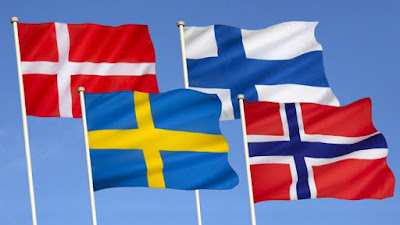
Not familiar with the Scandinavian Model of Leadership? 
Then you are truly missing out...
by Tatiana Compton


The importance of delegating is often undervalued as a requisite of a great leader, don’t make this mistake.

Devolving responsibility and accountability stimulates collaboration, innovation and creativity. And that is part of what the Scandinavian Model of Leadership is all about (but we’ll get to that in just a moment).

Leadership qualities such as courage, resilience and confidence are much admired as tools for steering a company in the right direction. Less often praised is the importance of delegation, it is a quieter quality. Delegation is a powerful tool and handled wisely it will lead a straighter path to success. A leader who maintains total control and authority is not a true leader- by definition a leader guides or inspires others, providing the knowledge and methods for people to take action. Attention to detail has its place – but overdo it and you will impede progress.

Delegating isn’t always easy. In the short term delegating a task might seem like an unworthy effort, but in the long term delegating will give you more time, motivate those around you (boosting productivity) and consequently make you a more effective leader. “If you really want to grow as an entrepreneur, you’ve got to learn to delegate” (Richard Branson).

Here are 3 reasons why a great leader delegates:
  • It frees up valuable time
In an age where time is in short supply, it is as important as ever to be able to delegate, it will give you the time you need to focus on the truly important aspects of your project or business. Prevent burn out.
  • It will empower and motivate those around you
Trust those around you and in return they will trust and follow you. Employees who feel valued are involved and engaged in their work and will contribute more. The managerial mentality ‘if you want something done, you must do it yourself’ will provide employees with little responsibility and consequently reduce job motivation.
  • It will develop your team
Providing challenging assignments for your team will develop their skill sets and enable them to move on to the next level. Delegating can be used as a source of creativity as it gives space for new approaches from different mindsets, providing the opportunity for employees to become more engaged as they are given the chance to learn. Don’t micro-manage!

What We Can Learn From the Scandinavian Model of Leadership

The Scandinavian model of leadership prides itself on a high degree of devolved responsibility and accountability which in turn creates an empowering and enabling environment. This ‘flat’ management model from Scandinavia means their leaders focus on building management out, not up. It is no surprise then that the Global Competitiveness Report from the World Economic Forum names Sweden, Denmark and Finland as the three highest ranking countries on ‘willingness to delegate responsibility’.

In the post-industrial knowledge economy delegating is particularly important because success relies on collaboration across the company. Jan Carlzon, ex-CEO of Scandinavian Airlines and famous proponent of the ‘Scandinavian Model of leadership’, explains his success at the company as a product of his efforts to change the approach to a flatter decentralized organization. If you really want to be business-oriented and customer- driven you must be brave enough to give responsibility to every individual person out there in the front line, as Jan Carlzon explains in his book Moments of Truth: New Strategies for Today’s Customer- Driven Economy (1987).

Essentially you should be a strategic leader – give away information and create an environment where people are prepared to take risks and responsibility. Jan Carlzon explains how a strategic leader will say, “This is my vision and this is my strategy; this is the avenue that we all have to walk down. On that avenue, you have all the freedom to take your own solutions, but we all go the same way. And, if there is somebody in this organization who does not accept and who does not want to go the same way, then you have to leave.”

A great leader supports and develops their team by building their confidence and abilities through supportive delegation. Most successful leaders understand their staff and motivate them through trust and personal development – delegating is an effective tool for achieving this. When used correctly delegation can be of major benefit to a company and is a tool that should be utilized and acted upon in order for leaders to gain the best results from their businesses and employees.

Fuente: Ivyexec

Haciendo click en cada uno de los links siguientes, Contenidos de nuestros 
TALLERES DE CAPACITACIÓN IN COMPANY, "A MEDIDA" 
de las necesidades de su Organización:


Consultas al mail: medinacasabella@gmail.com
ó al TE: +5411.3532.0510


.·. Miguel Ángel MEDINA CASABELLA, MSM, MBA, SMHS .·.
Especialista en Management Estratégico, Gestión del Cambio e Inversiones
Representante de The George Washington University en Foros y Ferias de LatAm desde 2001
Representante de The George Washington University Medical Center para los Países de LatAm desde 1996
Ex Director Académico y Profesor de Gestión del Cambio del HSML Program para LatAm en GWU School of Medicine & Health Sciences (Washington DC)
CEO, MANAGEMENT SOLUTIONS GROUP LatAm
EMail: medinacasabella@gmail.com
TE Oficina: ( 0054) 11 - 3532 - 0510
TE Móvil (Local): ( 011 ) 15 - 4420 - 5103
TE Móvil (Int´l): ( 0054) 911 - 4420 - 5103
Skype: medinacasabella


MANAGEMENT SOLUTIONS GROUP LatAm ©
(medinacasabella@gmail.com; +5411-3532-0510)
es una Consultora Interdisciplinaria cuya Misión es proveer
soluciones integrales, eficientes y operativas en todas las áreas vinculadas a:

Estrategias Multiculturales y Transculturales, Organizacionales y Competitivas,
Management Estratégico,
Gestión del Cambio,
Marketing Estratégico,
Inversiones,
Gestión Educativa,
Capacitación

de Latino América (LatAm), para los Sectores:

a) Salud, Farma y Biotech,
b) Industria y Servicios,
c) Universidades y Centros de Capacitación,
d) Gobierno y ONGs.

Tuesday, April 26, 2016

Economía de LatAm: Argentina, Brasil, Chile y Panamá
por Miguel Ángel Medina Casabella


Aumentan reservas del Banco Central Argentino; contrata a Moody's para calificar deuda

Las reservas internacionales del Banco Central de Argentina subieron l pasado viernes a 35.845 millones de dólares, 6.662 millones más que el día anterior, producto de los recursos que ingresaron al país tras la colocación de deuda para el pago a fondos especulativos y holdouts. Asimismo se informó que el gobierno argentino contrató a Moody's como calificadora de la deuda del país, por “su importante trayectoria y experiencia en el mercado nacional e internacional”, y para la emisión y colocación de nuevos títulos públicos.

Cabe recordar que Moody's mejoró a la capacidad crediticia de la Argentina de Caa1 a B3, al destacar la expectativa de que Argentina resuelva su contienda con los fondos

Argentina estima que las lluvias ya le costaron 3.3 millones de toneladas de soja

El Ministerio de Agroindustria de Argentina estimó que las pérdidas en la producción de soja serían de 3,3 millones de toneladas, por lo que la campaña actual se ubicaría en 57,6 millones de toneladas, mientras que la Bolsa de Cereales de Buenos Aires proyectó un descenso de cuatro millones de toneladas, debido a las constantes lluvias que cayeron durante más de dos semanas sobre grandes superficies de las zonas productoras.

Estas consideraciones concordaron con las proyecciones de recortes de la Sociedad Rural Argentina (SRA) que llegarían a los cuatro millones de toneladas, lo que significaría entre “1.200 y 1.300 millones de dólares que dejarían de entrar a la economía del país”, manifestó su presidente, Luis Miguel Etchevehere.

Economía de Brasil en caída libre: contracción este ejercicio sería un nuevo récord

Los expertos pronostican que la economía brasileña caerá este año un 3,88%, una contracción más grave que la sufrida en 2015, en el que cayó un 3,8% y obtuvo su peor resultado en el último cuarto de siglo, informó el Banco Central. Las previsiones de los economistas son peores que las anunciadas la semana pasada, cuando auguraron que el Producto Interior Bruto (PIB) brasileño acabaría este año con el mismo rumbo que lo hizo en 2015.

Por otro lado, los economistas reducen sus previsiones de inflación en 2016, que calculan en torno al 6,98%, inferior al 7,08% del anterior informe. Sin embargo, esta cifra continúa por encima de la meta oficial establecida por el Gobierno, que se encuentra en el 4,5% del PIB con un margen de tolerancia de dos puntos porcentuales. Para 2017, se espera que la inflación llegue al 5,80%.
A la incertidumbre y paralización de las inversiones se suma un déficit presupuestal que se estima ya alcanza el 11% del PBI.


Brasil aumenta pérdida de empleos formales en medio de crisis política

Brasil perdió 118.776 empleos formales el pasado marzo, registrando así su peor resultado para ese mes en los últimos 25 años, desde que comenzó la actual serie de medición, informó el Ministerio de Trabajo. El balance producto de 1.374.485 contrataciones frente a 1.493.261 despidos, lo que situó en 39.373.900 la cantidad acumulada de empleos formales registrados.
En cuanto a sectores, la administración pública fue el segmento con mejor desempeño y el único que consiguió cerrar en verde al crear 4.335 puestos de trabajo, frente al comercio, que anotó una pérdida de 41.978 empleos.
Esta semana el Instituto Brasileño de Geografía y Estadísticas (IBGE) divulgó también los datos del desempleo en el país, que aumentó un 40,1% en el último año hasta alcanzar la cifra récord de 10,4 millones en el trimestre concluido en febrero.

India y Chile amplían acuerdo comercial y suman 474 productos más

La Dirección General de Relaciones Económicas Internacionales (Direcon) confirmó que autoridades del gobierno de India, aprobaron la ampliación del Acuerdo de Alcance Parcial con Chile, e implicará la ampliación de 474 productos contemplados en el acuerdo original ya suscrito entre ambos países y vigente desde el año 2007, a cerca de 2.800.
Entre los bienes chilenos que se suman y que serán beneficiados, destacan entre otros, los productos agrícolas: cerezas frescas, cebollas, paltas, uvas, kiwis, mandarinas, duraznos en conserva, pasta de tomates, cerezas en conserva, cóctel de frutas, jugos de uvas y manzanas.
Por otra parte, a diferencia del acuerdo original, el proceso de profundización contempla márgenes de preferencia arancelaria en promedio entre un 80% y 100%.
Durante 2015 el intercambio comercial de Chile con India sumó alrededor de US$2.723 millones. Las exportaciones chilenas a ese mercado totalizaron US$2.003 millones, mientras que las importaciones alcanzaron los US$720 millones.

Ampliación del canal de Panamá se inaugura 26 de junio; 70 jefes de estado invitados

La ampliación del Canal de Panamá se inaugurará el próximo 26 de junio con el tránsito del primer buque comercial con carga y una ceremonia protocolaria a la que están invitados 70 jefes de Estado, entre ellos los gobernantes de los 35 países de la Organización de Estados Americanos (OEA), el estadounidense, Barack Obama y el chino Xi Jinping.

También se invitará al rey Felipe VI de España y al ex presidente Jimmy Carter, quien en 1977 firmó junto con el entonces gobernante panameño Omar Torrijos los tratados que permitieron el traspaso a Panamá de la soberanía de la vía interoceánica.
Estados Unidos construyó entre 1904 y 1914 el Canal de Panamá, y lo administró hasta que lo revirtió a manos panameñas el 31 de diciembre de 1999.
La ampliación consiste en un tercer carril por donde pasarán barcos Neopanamx, con capacidad de hasta 13.000 contenedores, casi el triple de lo actual, y tiene un coste global inicial de 5.250 millones de dólares.

Fuentes: MercoPress

Haciendo click en cada uno de los links siguientes, Contenidos de nuestros 
TALLERES DE CAPACITACIÓN IN COMPANY, "A MEDIDA" 
de las necesidades de su Organización:

  • Curso Taller ¿Cómo incorporar y aplicar Modelos de PENSAMIENTO ESTRATÉGICOen la Organización? 2016-2017:
  • http://medinacasabella.blogspot.com.ar/2016/04/pensamiento-estrategico-curso-taller-in.html
  • Curso Taller de PLANEAMIENTO ESTRATÉGICO - Recetas Eficientes para Escenarios Turbulentos 2016-2017:
  • http://medinacasabella.blogspot.com.ar/2016/04/planeamiento-estrategico-curso-taller.html
  • Curso Taller ¿Cómo Gerenciar Eficientemente a partir del MANAGEMENT ESTRATÉGICO? 2016-2017:
  • http://medinacasabella.blogspot.com.ar/2016/04/management-estrategico-curso-taller-in.html
  • Curso Taller ¿Cómo GERENCIAR PROCESOS DE CAMBIO y no sufrir en el intento? 2016-2017: 
  • http://medinacasabella.blogspot.com.ar/2016/04/gestion-del-cambio-2016-2017-curso.html
  • Curso Taller de LIDERAZGO TRANSFORMACIONAL para la Toma de Decisiones 2016-2017:
  • http://medinacasabella.blogspot.com.ar/2016/04/liderazgo-transformacional-2016-2017.html

Consultas al mail: 
medinacasabella@gmail.com
ó al TE: +5411.3532.0510


.·. Miguel Ángel MEDINA CASABELLA, MSM, MBA, SMHS .·.
Especialista en Management Estratégico, Gestión del Cambio e Inversiones
Representante de The George Washington University en Foros y Ferias de LatAm desde 2001
Representante de The George Washington University Medical Center para los Países de LatAm desde 1996
Ex Director Académico y Profesor de Gestión del Cambio del HSML Program para LatAm en GWU School of Medicine & Health Sciences (Washington DC)
CEO, MANAGEMENT SOLUTIONS GROUP LatAm
EMail: medinacasabella@gmail.com
TE Oficina: ( 0054) 11 - 3532 - 0510
TE Móvil (Local): ( 011 ) 15 - 4420 - 5103
TE Móvil (Int´l): ( 0054) 911 - 4420 - 5103
Skype: medinacasabella


MANAGEMENT SOLUTIONS GROUP LatAm ©
(medinacasabella@gmail.com; +5411-3532-0510)
es una Consultora Interdisciplinaria cuya Misión es proveer
soluciones integrales, eficientes y operativas en todas las áreas vinculadas a:

Estrategias Multiculturales y Transculturales, Organizacionales y Competitivas,
Management Estratégico,
Gestión del Cambio,
Marketing Estratégico,
Inversiones,
Gestión Educativa,
Capacitación

de Latino América (LatAm), para los Sectores:

a) Salud, Farma y Biotech,
b) Industria y Servicios,
c) Universidades y Centros de Capacitación,
d) Gobierno y ONGs.

Monday, April 25, 2016

Investors applaud Political Changes in Brazil & Argentina: Which Leaders are next?
by Ken Brown


Changes in governments matter more today because there are few attractive investment options.

In a world of richly valued markets and paltry yields, one way to make money is to bet on political drama.

The market cheered the impeachment and likely departure of Brazil’s Dilma Rousseff even before Sunday’s vote. The next day, investors were shoving each other aside to grab a piece of Argentina’s first bond offering since its new government took power.

Despite deep economic troubles in both countries, investors are betting optimism over new leaders and changing policies will drive up stock and bond markets.

“Investors are looking for that rare story that has a catalyst on it,” said Samy B. Muaddi, an emerging-markets-debt portfolio manager at T. Rowe Price.

This bet has long been an obvious if not always profitable trade in emerging markets. The last wave of change was in 2014, when Narendra Modi took power in India and Joko Widodo became president of Indonesia. Shares rose roughly 20% in India and Indonesia in the months leading to the election and held up later that year even as other emerging markets tumbled.

Changes in governments matter more today for two reasons: There are few attractive investment options, and many markets are moving in sync, driven by factors like commodity prices and U.S. interest rates.

A rally this year has pushed up emerging markets 7.3% through Tuesday, compared with a 2.8% rise in the S&P 500. That has forced investors to take on more risk to stay in the game, which means looking for turnaround stories, even if the turnarounds are largely uncertain.

The fun part is picking the next to fall. Topping the list are South Africa’s Jacob Zuma and Malaysia’s Najib Razak. Both leaders face corruption allegations and are under pressure to resign, though both are political survivors with strong party backing.

What excites investors is that both countries have young populations that are brimming with potential. What worries them is that both countries depend on China buying their commodities and both face policy paralysis caused by unpopular leaders and entrenched party establishments.

As with all emerging markets, both countries are unloved by investors and cheap on many measures. There are plenty of ways to make a buck in both places—appreciating currencies, better corporate earnings and improved investor sentiment.

The risk with betting on change in emerging markets is that problems are so deep and the global economic situation so weak that the optimism can dissipate quickly. And there is the possibility that the bad government can still get worse.

In South Africa, Mr. Zuma backed off a plan to replace a respected finance minister after markets sold off. In Malaysia, Mr. Najib appointed a political ally who served on the advisory board of a scandal-plagued government investment fund to replace the country’s widely respected central-bank head who is retiring.

Then there is undoing the mess left behind by the previous government. For many emerging markets, that means somehow paying off big piles of debt that were typically squandered on bad policies or used for political favors. Brazil’s debt tripled to $1 trillion in the last nine years and all three major credit-rating firms reduced the country’s rating to junk. The economy shrank 3.8% last year and will likely shrink again this year, making the debt even more burdensome.

But investors think back to 1992 and the last impeachment in Brazil, when then President Fernando Collor was charged with corruption. His resignation eventually ushered in the presidency of Fernando Enrique Cardoso, who oversaw the country’s economic revival.

As heartless as they can be, investors appear to be very forgiving these days. Witness Argentina, which has been at war with hedge funds for 15 years and whose central bank said earlier this year it would start printing higher-denomination bank notes to deal with inflation that is estimated at around 40%.

The buying frenzy for Argentina’s offering—$70 billion in orders for $16.5 billion in bonds—should be incentive enough for every country with a lousy government to make a change. It is staggering that investors would lend money for 30 years to a country that just emerged from a default in return for a yield of just 8%. Buyers apparently bid up the bond prices further after the deal.

But with emerging-market currencies up about 10% from their lows and bond yields down to 4.6%, there aren’t many options to get a juicy return.

There’s the frenzy and then the hangover. Two years after Messrs. Widodo and Modi took over Indonesia and India, respectively, investors have started to lose patience with the pace of change, even though both countries are doing reasonably well.

The game of who is next to fall is tough. Messrs. Najib and Zuma could hold on until the end of their terms in 2018 and 2019, respectively. The next big fish on the investor wish list: Vladimir Putin. One can always dream.

Fuente: THE WALL STREET JOURNAL

Haciendo click en cada uno de los links siguientes, Contenidos de nuestros 
TALLERES DE CAPACITACIÓN IN COMPANY, "A MEDIDA" 
de las necesidades de su Organización:

  • Curso Taller ¿Cómo incorporar y aplicar Modelos de PENSAMIENTO ESTRATÉGICOen la Organización? 2016-2017:
  • http://medinacasabella.blogspot.com.ar/2016/04/pensamiento-estrategico-curso-taller-in.html
  • Curso Taller de PLANEAMIENTO ESTRATÉGICO - Recetas Eficientes para Escenarios Turbulentos 2016-2017:
  • http://medinacasabella.blogspot.com.ar/2016/04/planeamiento-estrategico-curso-taller.html
  • Curso Taller ¿Cómo Gerenciar Eficientemente a partir del MANAGEMENT ESTRATÉGICO? 2016-2017:
  • http://medinacasabella.blogspot.com.ar/2016/04/management-estrategico-curso-taller-in.html
  • Curso Taller ¿Cómo GERENCIAR PROCESOS DE CAMBIO y no sufrir en el intento? 2016-2017: 
  • http://medinacasabella.blogspot.com.ar/2016/04/gestion-del-cambio-2016-2017-curso.html
  • Curso Taller de LIDERAZGO TRANSFORMACIONAL para la Toma de Decisiones 2016-2017:
  • http://medinacasabella.blogspot.com.ar/2016/04/liderazgo-transformacional-2016-2017.html

Consultas al mail: 
medinacasabella@gmail.com
ó al TE: +5411.3532.0510


.·. Miguel Ángel MEDINA CASABELLA, MSM, MBA, SMHS .·.
Especialista en Management Estratégico, Gestión del Cambio e Inversiones
Representante de The George Washington University en Foros y Ferias de LatAm desde 2001
Representante de The George Washington University Medical Center para los Países de LatAm desde 1996
Ex Director Académico y Profesor de Gestión del Cambio del HSML Program para LatAm en GWU School of Medicine & Health Sciences (Washington DC)
CEO, MANAGEMENT SOLUTIONS GROUP LatAm
EMail: medinacasabella@gmail.com
TE Oficina: ( 0054) 11 - 3532 - 0510
TE Móvil (Local): ( 011 ) 15 - 4420 - 5103
TE Móvil (Int´l): ( 0054) 911 - 4420 - 5103
Skype: medinacasabella


MANAGEMENT SOLUTIONS GROUP LatAm ©
(medinacasabella@gmail.com; +5411-3532-0510)
es una Consultora Interdisciplinaria cuya Misión es proveer
soluciones integrales, eficientes y operativas en todas las áreas vinculadas a:

Estrategias Multiculturales y Transculturales, Organizacionales y Competitivas,
Management Estratégico,
Gestión del Cambio,
Marketing Estratégico,
Inversiones,
Gestión Educativa,
Capacitación

de Latino América (LatAm), para los Sectores:

a) Salud, Farma y Biotech,
b) Industria y Servicios,
c) Universidades y Centros de Capacitación,
d) Gobierno y ONGs.